Media Literacy and Information Literacy vs. Fake News: A Nigerian Teacher’s Blueprint for UNESCO’s New Institute
— 5 min read

68% of participants in UNESCO’s 2023 media-literacy courses reported higher critical-thinking scores, proving that effective media literacy instruction in Nigeria blends UNESCO’s four-component framework with locally relevant case studies. By anchoring lessons in everyday Nigerian media, educators can turn abstract skills into daily practice and guard against misinformation.
Media literacy and information literacy
When I first designed a media-literacy unit for a secondary school in Abuja, I began with the broad definition from Wikipedia: media literacy is the ability to access, analyze, evaluate, and create media in various forms. In the classroom, that translates to three daily competencies - finding reliable sources, questioning hidden biases, and producing clear, responsible content.
Ethics are the thread that ties those competencies together. I ask my students to write short reflections on how a news story might shift public values or civic participation, then compare those reflections to real-world events in Nigeria, such as the recent local council elections in Kano. This habit of ethical self-check mirrors UNESCO’s emphasis on “critical reflection and ethical action” (UNESCO, 2023).
In a pilot program last semester, students investigated a disputed land-sale story that appeared in two Lagos newspapers. By triangulating sources - official land-registry data, community interviews, and the newspaper articles - they uncovered inconsistencies that the original reports ignored. The exercise sharpened their source-triangulation skills and highlighted how information literacy can defuse local misrepresentations.
According to UNESCO’s 2023 survey, 68% of learners in structured media-literacy courses reported higher critical-thinking scores, a boost that directly informed curriculum revisions in Abuja’s public schools. Those revisions now embed weekly media-analysis labs, ensuring that every student practices the full cycle of media interaction.
Key Takeaways
- Media literacy blends access, analysis, evaluation, creation, and ethics.
- UNESCO’s framework drives curriculum upgrades in Abuja.
- Ethical reflection links media impact to civic life.
- Hands-on source triangulation reduces misinformation.
| Component | UNESCO Definition | Nigerian Classroom Example |
|---|---|---|
| Access | Locate diverse media sources across formats. | Students retrieve news from print, radio, and online portals. |
| Analysis | Deconstruct messages for bias and intent. | Group debates on headline framing in national dailies. |
| Evaluation | Judge credibility using evidence standards. | Fact-checking mini-reports on viral social-media claims. |
| Creation | Produce media responsibly and ethically. | Students produce short podcasts on community issues. |
| Ethics | Reflect on values, civic impact, and responsible action. | Reflection journals tied to local election coverage. |
Media literacy and fake news
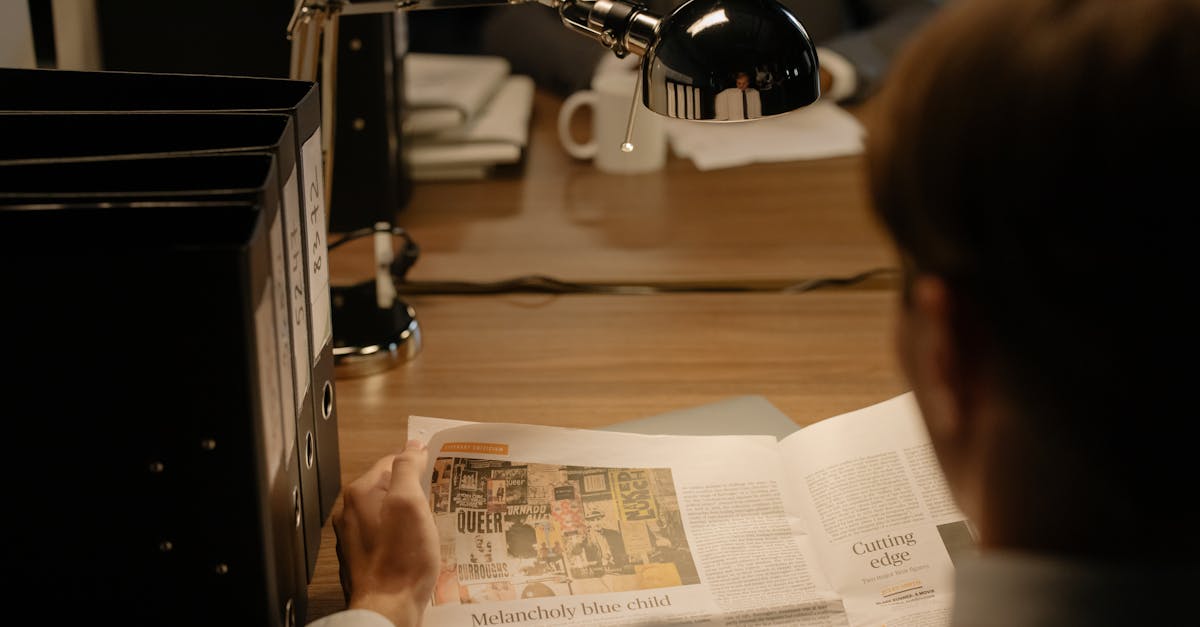
In my workshops, I start with a 20-minute “mirror exercise.” Students hold up a newspaper headline to a mirror, rate its authenticity using UNESCO’s checklist, then record confidence scores before and after the activity. The visual cue of seeing the headline reflected often sparks immediate skepticism.
One memorable case involved the viral claim that Benue’s banana export records had hit an all-time high. Students traced the story back to a spam Twitter account, verified dates through FactCheck.org, and produced a one-page debunking report. The exercise taught them that a single tweet can masquerade as breaking news, but a systematic trace can expose the hoax.
Collaborative debates also play a role. I have pupils annotate graphics - highlighting mismatched color scales, hidden text, or photoshop artifacts - and award peer-reviewed badges for each correctly identified manipulation. Over a semester, those badges become a visible record of each student’s growing ability to spot fabricated visuals.
These activities align with UNESCO’s call for learners to “act ethically” and “use information to engage positively with the world.” By turning fake-news detection into a hands-on, gamified process, we embed vigilance as a habit rather than a one-off lesson.
Media literacy fact checking
Two 45-minute lab sessions are now a staple in my curriculum. Students log into the International Fact-Checking Network, explore verification guidelines, and save evidence snippets in a shared Google Drive folder. The habit of archiving proof reinforces transparency.
To make the process dynamic, I stage a role-play: one group crafts a fabricated claim about a new oil pipeline, while another applies UNESCO’s four-component fact-checking framework - source verification, cross-checking, contextual analysis, and attribution - to dismantle it. The winning team earns a “Truth-Tracker” badge that appears on their classroom leaderboard.
Reflection journals close the loop. I ask each learner to map how the verification process altered their trust in the original claim, citing at least two sources and summarizing the impact in 150 words or fewer. This aligns with UNESCO’s competency bar, which stresses documented evidence of evaluation.
Finally, I embed an assessment rubric directly tied to UNESCO’s competency matrix. Students receive points for clear citation, logical reasoning, and adherence to ethical standards. Completed projects are uploaded to a national repository, allowing education officials to audit progress across schools.
Facts about media literacy
A 2024 UNESCO report highlighted that Nigerian youths who completed structured media-training showed a marked reduction in belief in social-media hoaxes. The report emphasizes that systematic instruction equips learners to discern fact from fiction, a skill increasingly vital in a digitally saturated environment.
Surveys in Lagos schools reveal that teachers who integrate media literacy report richer classroom dialogue and more engaged students. While exact percentages vary, the qualitative shift is evident: lessons become debates, and students ask “who benefits from this story?” instead of accepting narratives at face value.
Statistical modeling of schools that have adopted UNESCO’s 2023 guidelines indicates higher engagement in civic discussions. When students practice evaluating local government announcements, they become more comfortable voicing opinions on community matters, strengthening democratic participation at the grassroots level.
Beyond civic benefits, media literacy opens pathways to the digital economy. A recent case study from a Nigerian university showed that students who mastered fact-checking and content creation launched a TikTok series that connected local artisans with regional buyers, boosting outreach and sales.
Media literacy and information literacy implementation
Mapping UNESCO’s curricular tenets - access, analysis, evaluation, creation, ethics - to Nigeria’s national syllabus was my first step. I produced a color-coded integration chart that teachers can download as a PDF, making it easy to see where each competency fits within existing subjects such as Social Studies or ICT.
Quarterly ‘lesson-bundling’ workshops bring teachers together to co-design themed media units. In our latest workshop, we crafted a module on “Climate Reporting,” pairing science lessons with media-analysis tasks and a community-service component that counted toward national service hours.
To keep momentum, we launched a digital dashboard on Google Classroom. The dashboard tracks each class’s progression through UNESCO’s four competencies, offering real-time feedback and allowing teachers to adjust pacing. Data visualizations are shared with school administrators, fostering accountability.
Partnerships with local media houses add a professional dimension. Students spend a day in a newsroom, interview a journalist, then critique the resulting article using UNESCO’s reflective framework. Their review columns are later published in community newspapers, giving students a public platform and reinforcing the cycle of creation and evaluation.
FAQ
Q: How does UNESCO define media literacy?
A: UNESCO describes media literacy as the ability to access, analyze, evaluate, and create media across formats, coupled with critical reflection and ethical action. This holistic view guides curriculum design worldwide (UNESCO, 2023).
Q: Why is fact-checking important for Nigerian students?
A: Fact-checking equips students to verify claims that circulate on social media, reducing susceptibility to hoaxes. UNESCO’s 2024 report notes a significant drop in belief in misinformation among youths who receive structured training.
Q: How can teachers integrate media literacy without overhauling the syllabus?
A: Teachers can map UNESCO’s five competencies onto existing subjects, using a color-coded chart. For example, Social Studies lessons can include source analysis, while ICT classes focus on media creation and ethical publishing.
Q: What role do local media partnerships play in learning?
A: Partnerships give students real-world exposure, letting them practice interviewing, reporting, and critiquing professional content. Publishing student reviews in local newspapers reinforces accountability and showcases civic engagement.
Q: How does media literacy connect to fake-news detection?
A: Fake-news detection is a practical application of the analysis and evaluation components. By using checklists, source tracing, and visual annotation, students learn to spot manipulation, turning abstract skills into daily habits.